
Type B Deck Live-Load Deflection Limits: FL Engineer Guide
We offer Type B deck live-load deflection compliance services in Florida, including engineer-coordinated calculations, span verification, and certified installation for commercial and residential projects
Or Call 305-760-2575
Summary
- Florida code specifies L/240 or L/360 limits
- Engineers often require stricter deflection limits
- We provide compliance assessments and engineered solutions
Understanding Type B deck live-load deflection limits in Florida is essential for compliance and long-term performance. This article explains how the Florida Building Code, ASCE references, and local structural engineers interpret serviceability criteria for Type B metal decks so you can plan with confidence.

Florida Code Requirements
The Florida Building Code defers to ASCE 7 for live-load definitions and serviceability limits. For metal roof and floor decks, common live-load deflection criteria applied by code or referenced standards include L/240 for many roof applications and L/360 for more sensitive serviceability requirements. Specific limit selection depends on occupancy, roofing system, and contract documents.
Local Florida structural engineers frequently tighten limits beyond the base code when project conditions demand it. Typical engineer-driven choices include L/360 for pedestrian-access roofs, terraces, or rooftop equipment, L/240 for non-traffic roof decks, and project-specific ratios for long-span systems or vibration-sensitive installations.
Local Engineer Practices
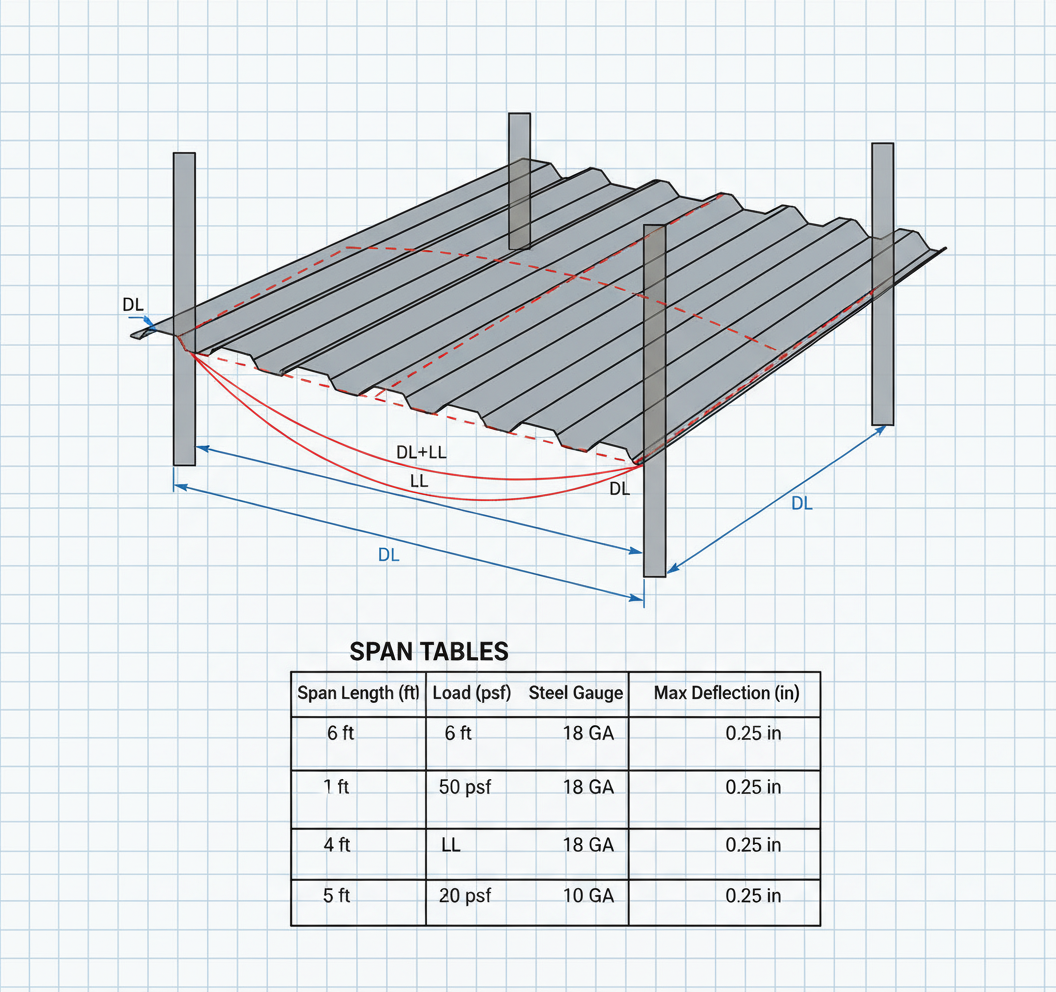
Designers use engineering calculations and manufacturer section properties to predict deflection under specified live loads. Miami Metal Deck provides engineer-verified deflection calculations for Type B deck live-load deflection limits in Florida, including span tables, composite action checks, and documentation suitable for permit reviews.
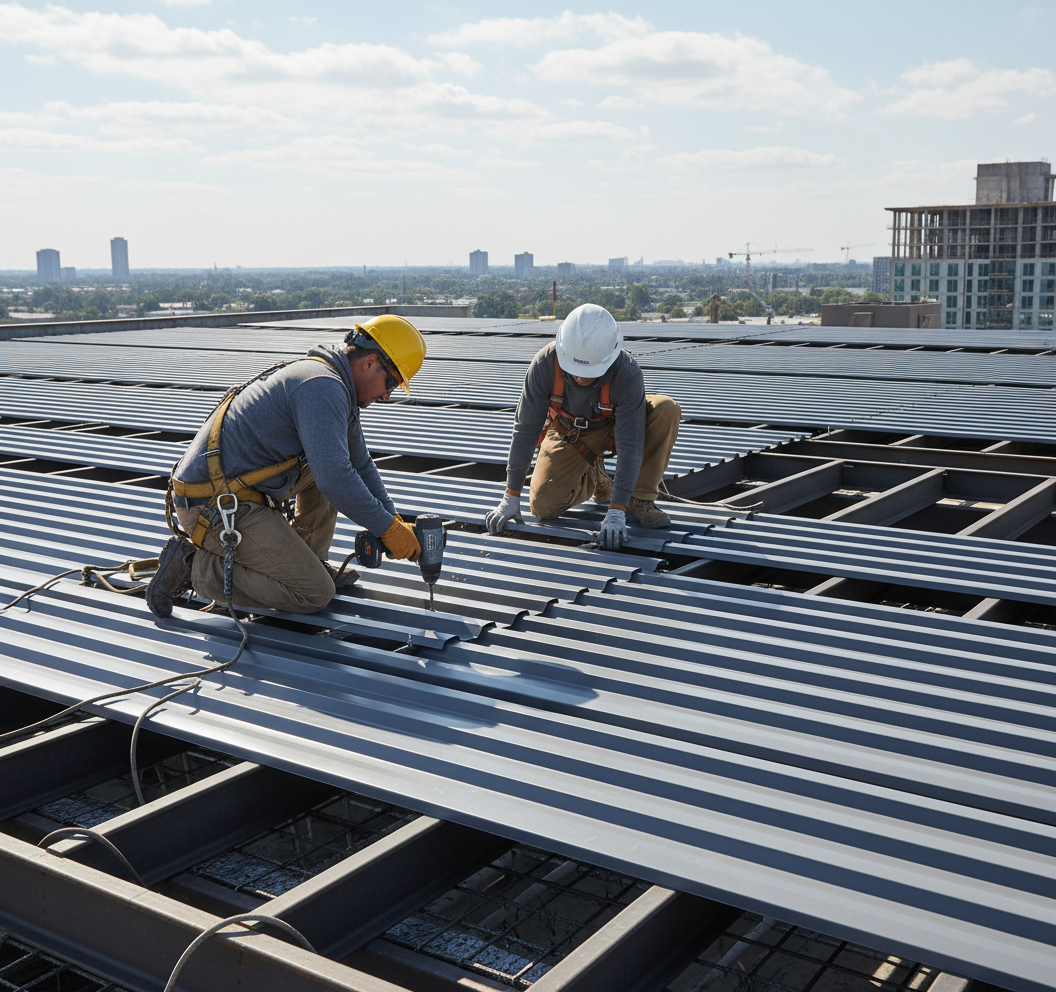
On-site quality control is critical. Proper fastening patterns, deck seating, and field welding or mechanical attachment affect measured deflection. We follow documented QA procedures, supply installation records, and coordinate with your structural engineer to demonstrate compliance and reduce change orders.
Design and QA Best Practices
When code and engineer requirements differ, the more stringent deflection limit governs. You should plan for the strictest reasonable criterion during budgeting and design so installation meets both permit and owner expectations without rework.
Common pitfalls include relying on generic span tables, ignoring roof membrane stiffening effects, and omitting composite deck checks. Our team identifies these risks early, providing remedial options such as increased gauge, reduced spans, or additional supports to meet tighter deflection targets.
Miami Metal Deck Compliance Services
Miami Metal Deck specializes in code-aware Type B deck installations across Florida, delivering engineer-backed calculations, field verification, and documentation that align with Florida Building Code expectations and local engineer practices for live-load deflection limits.